
A framework for determining when AI can make decisions

The AI Decision Matrix uses ambiguity and risk to determine the optimal decision-making structure between humans and AI automation.
A framework for determining when AI can make decisions
The AI Decision Matrix uses ambiguity and risk to determine the optimal decision-making structure between humans and AI automation.
What 3 new MIT Sloan professors have learned about AI

New faculty members are thinking about how AI can help decision-making, the value of adversarial AI agents, and the skills workers need in the AI era.
13 MIT startups to watch in 2026
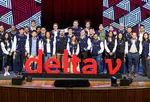
The 2026 MIT delta v Demo Day showcased startup innovations in biotechnology, healthcare, AI, cybersecurity, robotics, finance, and manufacturing.
Generative AI as a tool for market research

Market research is essentially a prediction problem. MIT Sloan’s John Horton says organizations should consider using generative AI to simulate the effects of their decisions before they make them.
Judgment-free AI appeals to embarrassed clients

Professional service advisers are seen as more capable than AI — but that advantage fades when clients feel ashamed. An MIT Sloan study shows when people prefer AI’s nonjudgmental assistance.
AI boosts productivity — but does that translate to final outputs?

A new study found that developers using AI tools can write much more code than those working without AI, but they don’t release as much new software.
10 levers for shaping generative AI that improves worker performance

A report from the MIT Working Group on Generative AI & the Work of the Future identifies three principles and seven outcomes that ensure that jobs are better, not just faster, with AI.
4 ways to navigate entrepreneurship in the age of AI

MIT Sloan’s Bill Aulet and Jenny Larios Berlin explore how founders can combine artificial intelligence with the principles of Disciplined Entrepreneurship to move from concept to market more quickly.
‘No One Works Here’ urges firms to tackle human bottlenecks with AI

In his new book, MIT Sloan School of Management’s Paul Cheek argues that companies lose competitive ground when they keep humans in the loop on decisions that AI can make more efficiently.