
Four Spy Groups Used the Same Chrome and Windows Exploit Kit Within a Week

Multiple espionage-motivated threat activity clusters have been found deploying a previously undocumented exploit kit called BlueMoon that chains together multiple vulnerabilities in Microsoft Windows and Google Chrome. The first in-the-wild use of BlueMoon has been attributed to the China-aligned state-sponsored group tracked as APT31 (aka Bronze Vinewood, Judgement Panda, JungleBamboo,
Infostealer Logs Expose Replayable AI Tokens That Can Bypass MFA
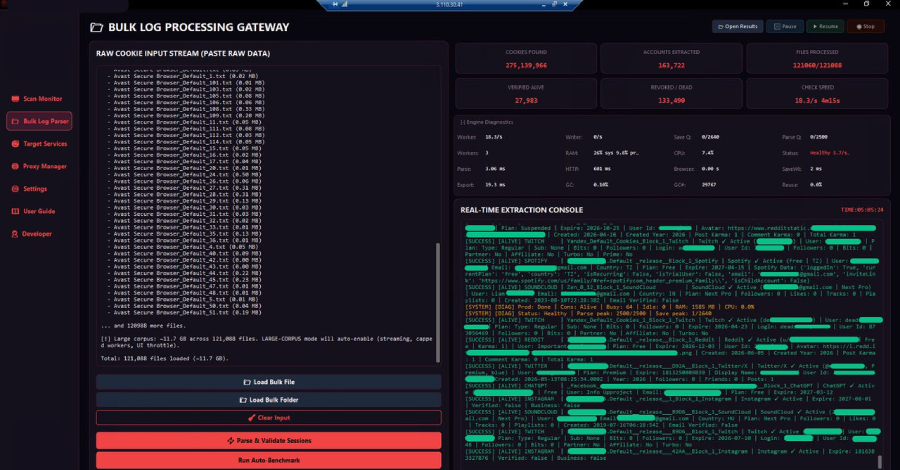
Cybercriminals are hijacking artificial intelligence (AI) user accounts via information stealer logs to create “stolen keys” that grant illicit access to tools from model providers like Google, Anthropic, and others. Information stealers like Lumma Stealer or Vidar are equipped to harvest a wide range of data from compromised systems. This can include credential, session tokens, and API
JSCeal Malware Can Bypass Google Authentication Using Stolen Session Cookies

Cybersecurity researchers have unpacked JSCeal, a sophisticated compiled V8 JavaScript (JSC) malware with credential harvesting, surveillance, and traffic-interception capabilities. “The payloads are protected with javascript-obfuscator, using multiple techniques including RC4-protected strings, control-flow flattening, proxy functions, and operation wrappers,” Check Point Research said in a
Attackers Hijack MikroTik Routers Through Internet-Exposed SSH Without Authentication
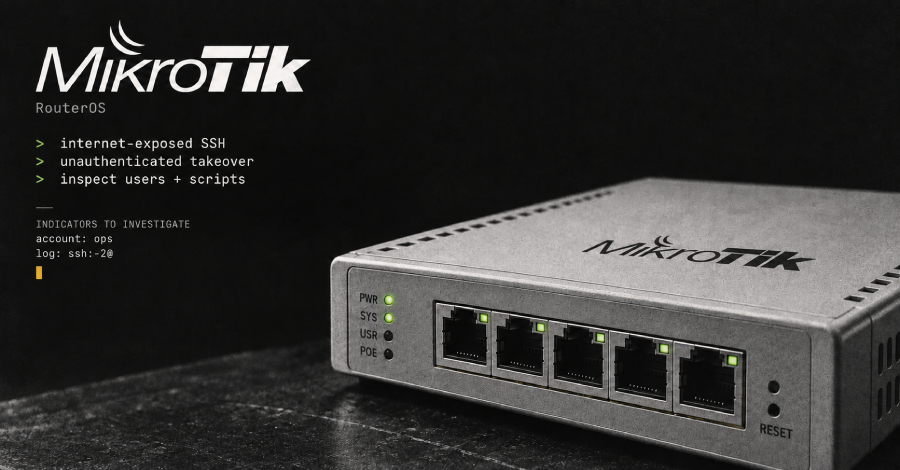
Attackers are exploiting MikroTik routers with their Secure Shell (SSH) remote-access service, which is reachable from the internet, to gain full administrative control without authentication, according to CERT Polska’s attack warning, published on September 5. Successful attacks date to at least September 2. The Hacker News’s September 6 review of the warning found no victim count or
China-Linked Fire Ant Hijacks Cisco Routers to Steal Credentials and Blind Security Logs

A China-nexus cyber espionage actor tracked as Fire Ant has expanded a long-running campaign beyond VMware hypervisors to compromise Cisco IOS XR routers, Terminal Access Controller Access-Control System (TACACS) servers, and Linux management hosts used to route, authenticate, and manage high-value networks. Sygnia, the incident response firm that investigated the intrusion, said the actor
DoJ Corrects China Hacking Claim, Says U.S. Agencies Were Targets, Not Victims

The U.S. Department of Justice (DoJ) on Friday corrected a previously issued press statement that several of its agencies were victims of attacks carried out by Chinese threat actors, instead now pointing out that they were among those targeted. Last week, the DoJ said the National Aeronautics and Space Administration, Federal Reserve, Department of Energy, Department of Justice, Department
N-able Says Attackers Take Over N-central Servers After Initial Fix Proves Incomplete

N-able said attackers exploited an authentication bypass in N-central to gain remote administrative access and reach the customer systems managed through those servers. Its first fix was incomplete. CVE-2026-18577 affects N-central builds prior to 2026.3.1.7. N-able shipped build 2026.3.1.7 on August 2 as the first unaffected version. N-central is the remote monitoring and management platform
Hugging Face Diffusers Flaws Could Let Model Repositories Execute Arbitrary Code
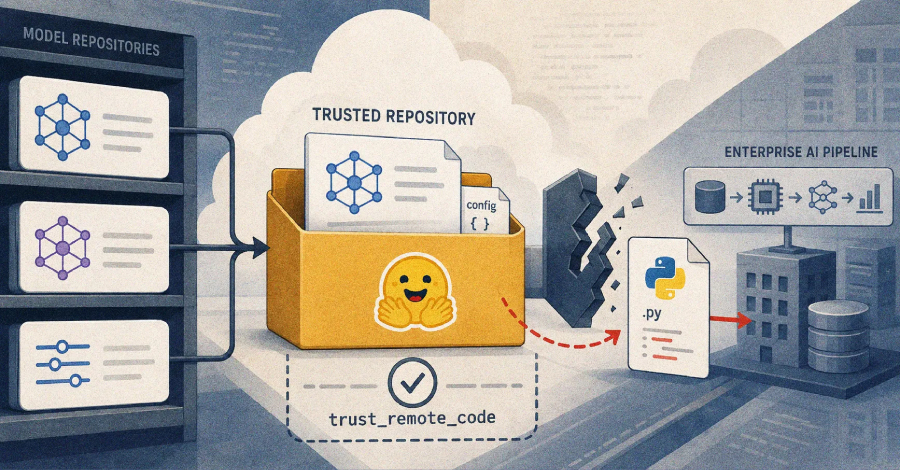
Three high-severity security flaws have been disclosed in Hugging Face’s Diffusers library that could allow crafted model repositories to stealthily execute arbitrary code on machines that load it, opening the artificial intelligence (AI) supply chain to security risk. “These vulnerabilities are bypassing trust_remote_code, the safeguard designed to stop unreviewed code from running in the
World’s Largest AI Model Repository Hugging Face Breached by Autonomous AI Agent

In an ironic twist, open-source artificial intelligence (AI) platform Hugging Face revealed that it was the victim of a hack perpetrated by an autonomous AI agent system. The company said it detected and responded to the incident targeting its production infrastructure earlier last week. “We identified unauthorized access to a limited set of internal datasets and to several credentials used by
SleeperGem Uses Three Malicious RubyGems Packages to Target Developer Machines

Cybersecurity researchers have flagged a new software supply chain attack codenamed SleeperGem targeting the Ruby ecosystem after three malicious gems were published to RubyGems with the end goal of serving additional payloads. The rogue gems are listed below – git_credential_manager (versions 2.8.0, 2.8.1, 2.8.2, 2.8.3) – Published on July 18, 2026 Dendreo (versions 1.1.3, 1.1.4) –